
Guides › Paying Suppliers on Time Without Running Short of Cash
Paying Suppliers on Time Without Running Short of Cash
RBTERP team · · 3 min read
How to plan supplier payments around due dates and cash, record each payment against its bill, and keep supplier balances agreeing with statements.
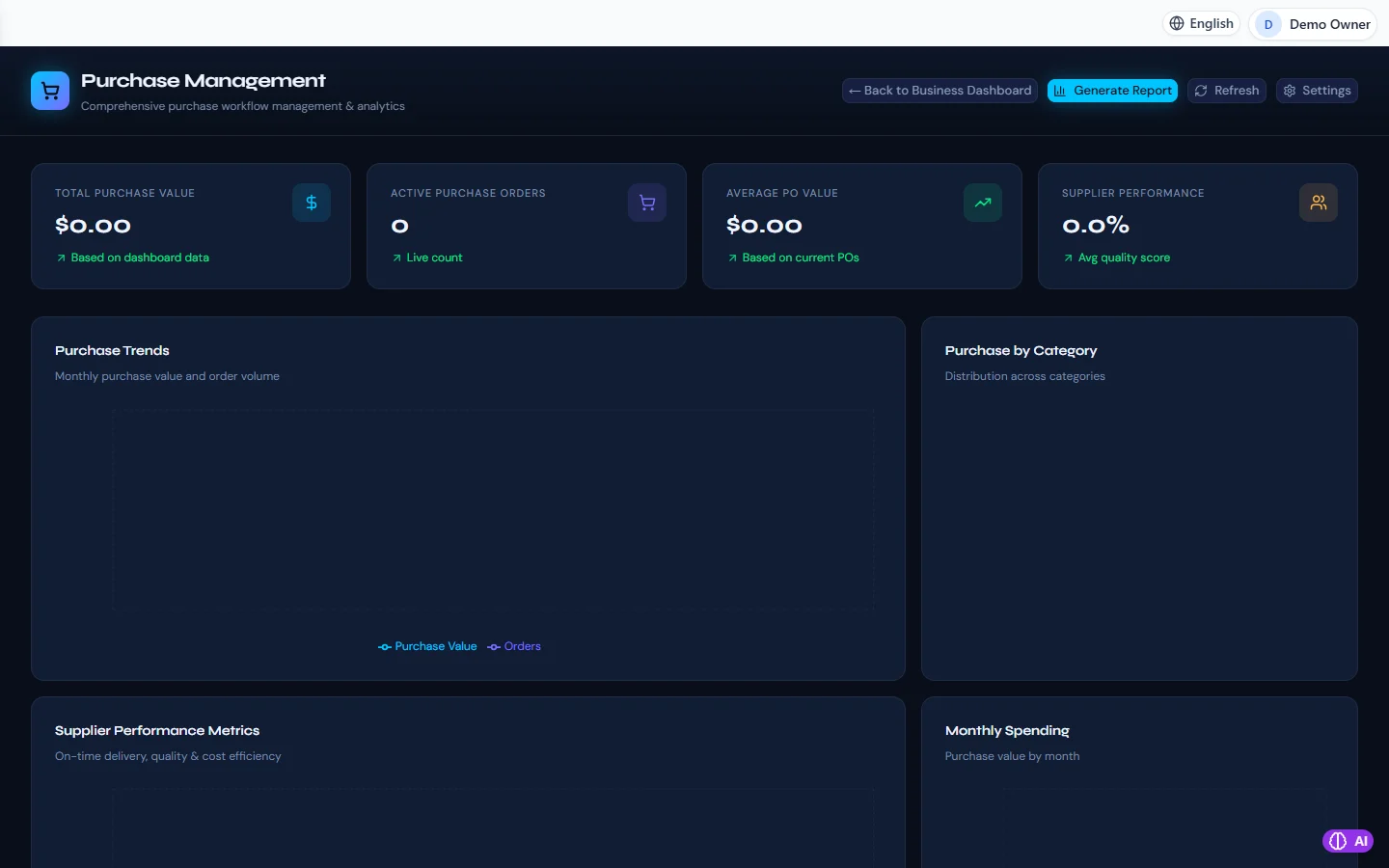
Purchasing in RBTERP, with a sample company and fictional data.
Paying suppliers is a balancing act. Pay too early and you give away cash you might need. Pay too late and you lose discounts, goodwill and sometimes supply itself. The answer is a payment routine built around due dates and your cash position.
Know what you owe and when
Your payables list shows every approved bill and its due date. Review it weekly:
- Due this week: pay these.
- Due next week: plan for them.
- Overdue: find out why. A bill held for a query should be resolved, not forgotten.
Plan payments around cash
Before each payment run, look at:
- The bank balance today.
- Money expected in from customers in the coming weeks.
- Payroll, rent, tax and loan payments due.
If cash is tight, decide deliberately who waits and talk to them before the due date. A supplier told in advance is usually patient. A supplier who discovers late payment on their own is not. The cash-flow forecast helps you see the squeeze coming.
A weekly payment run
- List approved bills due up to the next run.
- Check each against the supplier's statement, if you have one.
- Confirm the bank details on any new or changed supplier, by phone, before paying.
- Make the payments.
- Record each payment against the bill it settles.
One run a week, rather than payments every day, makes cash easier to manage and mistakes easier to spot.
Record payments against bills
A payment recorded against the bill it pays keeps the supplier's balance right. A payment recorded "on account" without a bill leaves you unable to tell which bills are still open, and invites paying the same bill twice.
Reconcile with supplier statements
Once a month, compare each major supplier's statement with your records. Differences usually come from:
- A bill they sent that you have not entered, or entered late.
- A payment still in transit.
- A credit note they issued that you have not recorded.
- A bill entered twice.
Resolve differences quickly, while everyone still remembers the details.
Paying suppliers in RBTERP
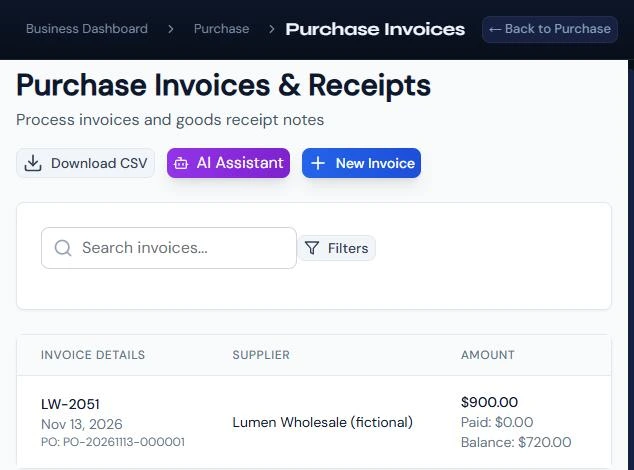
- Payment: once a bill is approved, record the payment with the amount, date, method and bank account. The payment reduces the payable and the bank balance, and appears in the bank's transactions.
- Closed months: a payment dated in a closed month is refused, so reported figures stay as reported. Date it in an open month.
- Foreign currency: a bill in another currency needs an exchange rate for the payment date, entered under Purchases, then Exchange rates.
- Bank side: each payment is a transaction in the bank account's register, ready to be matched against the bank statement. See bank reconciliation, step by step.
- Withholding tax: where your country pack requires tax to be withheld from a supplier payment, the withholding engine deducts it at the payee's status and records it as withholding payable. See sales tax and withholding setup.
- Payables ageing: the Finance module shows payables by age, so overdue bills stand out.
Early payment discounts
If a supplier offers a discount for paying early, work out what it is worth. Two percent for paying twenty days early is a very good return on your cash, if you have the cash. Ask your accountant how to record discounts taken.
See approving supplier bills for the check that comes before payment.
This guide uses the Purchasing module of RBTERP: Purchase orders, supplier bills, approvals and payments, with spending trends and supplier performance.