
Guides › Inventory Valuation: Why Stock Is Valued at Cost
Inventory Valuation: Why Stock Is Valued at Cost
RBTERP team · · 3 min read
How stock is valued in the accounts, why it is held at cost and not selling price, and how stock value drives your gross profit.
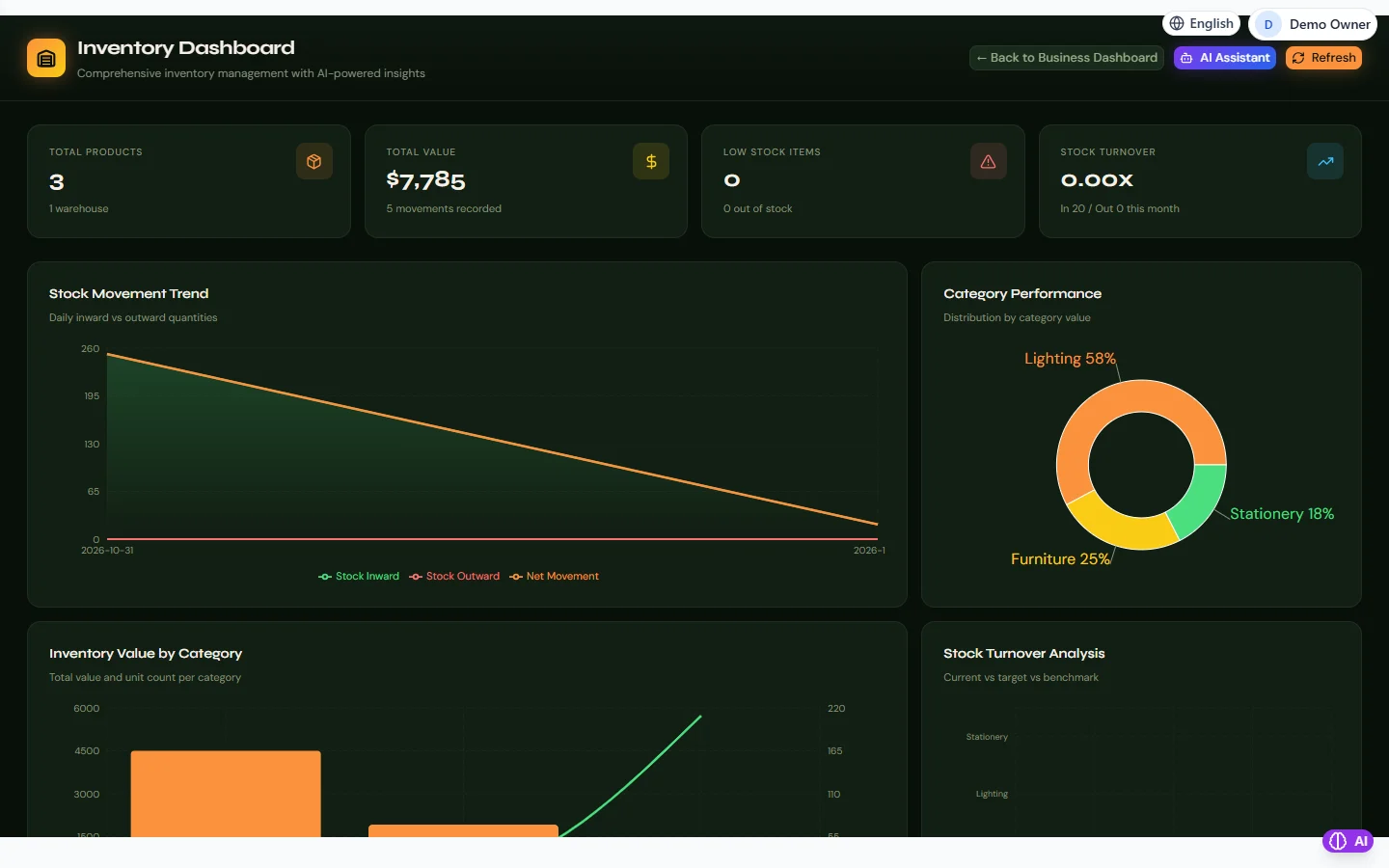
Inventory in RBTERP, with a sample company and fictional data.
Stock is often a trader's biggest asset, and the figure most likely to be quietly wrong. How you value it decides your gross profit, your balance sheet and, in time, your tax. This guide explains the principle in plain terms.
Stock is held at cost
In the accounts, stock is valued at what it cost you to buy and bring to its present location, not at what you hope to sell it for. Until goods are sold, the profit on them is only expected, and accounts do not record expected profit.
Cost includes the purchase price and, under most accounting frameworks, costs directly needed to get the goods ready for sale, such as inbound freight. Discuss with your accountant which costs you include, and apply the choice consistently.
How stock value drives profit
Gross profit is sales minus the cost of goods sold. The cost of goods sold is, in effect:
opening stock + purchases − closing stock
So every error in stock value is an equal error in profit:
- Stock overstated by 100,000 means profit overstated by 100,000.
- Stock understated means profit understated.
This is why the year-end stock count matters so much.
When stock is worth less than cost
Sometimes goods cannot be sold for what they cost: damaged, out of fashion, expired. Accounting principles say stock should not be carried above what you can realistically recover. Write such stock down, with the reason, and review slow-moving items at least at year-end.
Signs that stock value is wrong
- Items with zero cost. Goods received without a cost make every later sale look like pure profit.
- Negative quantities. A sale was recorded before the receipt.
- A gross margin that jumps around from month to month without a business reason.
- Stock value rising while sales are flat. Goods are piling up, or receipts are recorded and sales are not.
- The stock list and the inventory account disagree. Someone posted a journal to inventory instead of a stock movement.
Good habits
- Enter supplier bills with the right cost on product lines.
- Record every movement when it happens, never in bulk at month-end.
- Count regularly, and post differences as count gains or losses.
- Compare the stock list's value with the inventory account every month.
- Review slow movers every quarter.
Valuation in RBTERP
- At cost: RBTERP values stock at cost per warehouse. Stock-in movements carry a unit cost; purchases enter at the cost on the supplier's bill.
- The ledger follows stock: every receipt, delivery, transfer, adjustment and count posts to the inventory account and its counterpart automatically, so the stock list and the general ledger stay in agreement. Movements that belong to sales and purchase documents cannot be entered by hand.
- Cost of goods sold is recorded when goods are delivered, so gross profit reflects what was actually sold.
- Counts: the difference between counted and recorded quantity posts as a count gain or loss.
- Manufacturing: finished goods are received at the cost of the materials consumed, and scrap leaves stock at the cost it carried. See bills of materials and work orders.
- Analysis: the Inventory dashboard shows stock value, inventory value by category, and stock movement in and out.
Check stock value against the ledger as part of the month-end close, and count before year-end closing.
This guide uses the Inventory module of RBTERP: Stock by warehouse with valuation at cost, movements, low-stock alerts and category analysis.