
Guides › Depreciation and Asset Disposal Explained
Depreciation and Asset Disposal Explained
RBTERP team · · 3 min read
How depreciation spreads an asset's cost over its life, the common methods, and how to record selling, scrapping or losing an asset.
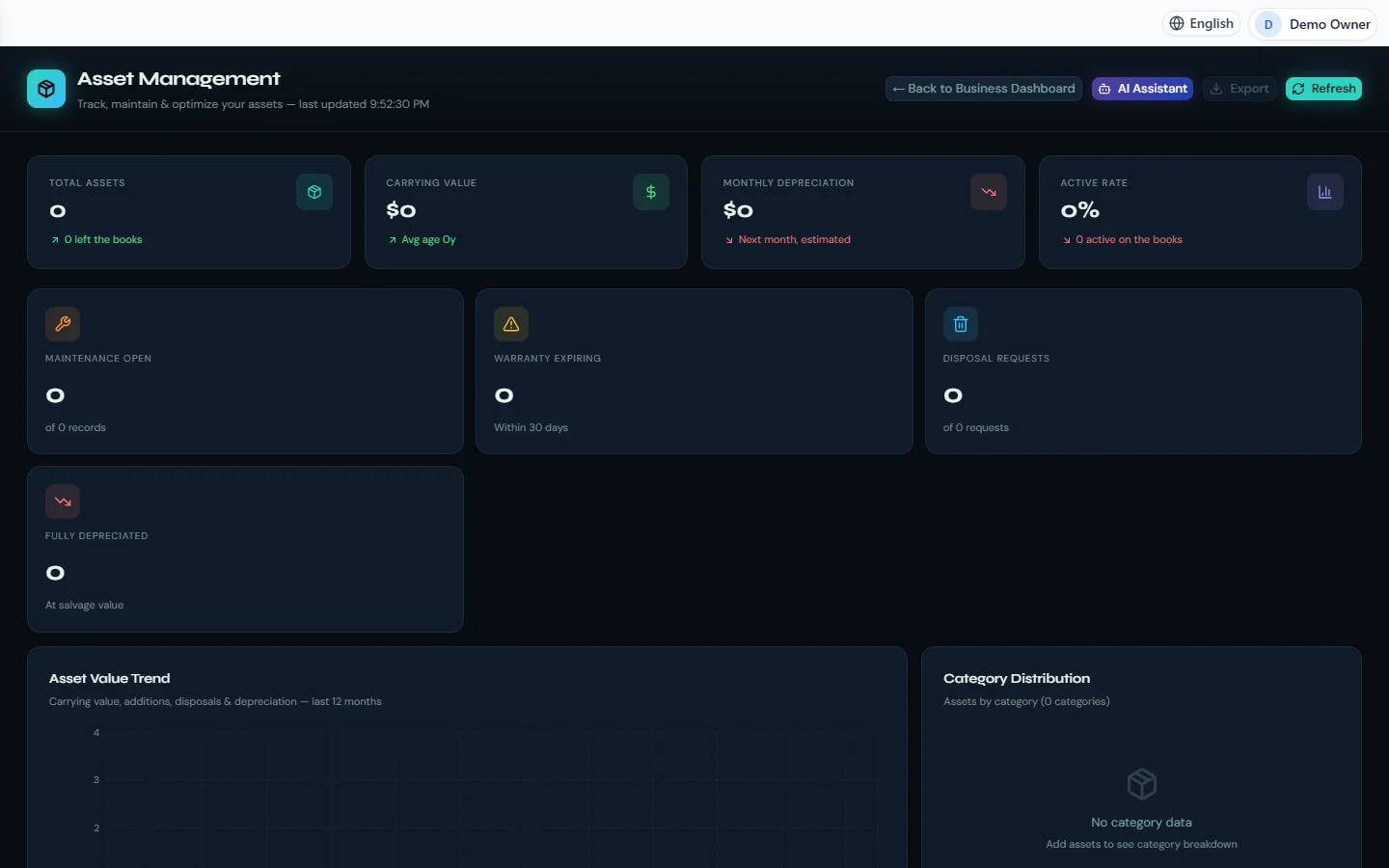
Fixed Assets in RBTERP, with a sample company and fictional data.
A machine bought for one million and used for five years does not cost one million in the year it was bought. It costs a share of that million in each year it earns money for you. Depreciation is how the accounts show that, and disposal is how they end the story when the asset leaves.
Why depreciate
Depreciation matches an asset's cost to the years it is used. Without it, profit would be very low in the year of purchase and too high in every year after. It also shows, on the balance sheet, how much of the asset's value has been used up.
Depreciation is not cash. No money leaves when it is recorded; the cash left when the asset was bought.
The inputs
- Cost: what the asset cost to buy and bring into use.
- Salvage value: what you expect to get for it at the end, often small.
- Useful life: how long you expect to use it, in years or months, or in units such as machine hours.
Common methods
Straight line
The same charge every period: (cost − salvage) ÷ life. Simple and the most widely used. A 1,200,000 machine with 200,000 salvage over 5 years is depreciated 200,000 a year.
Reducing balance
A fixed percentage of the remaining value each period. Charges are higher in early years and lower later, which suits assets such as vehicles that lose value fastest when new.
Units of production
The charge follows use: cost per unit × units used in the period. Suits machinery whose wear depends on output, not on time.
Your accountant will advise which method suits each class of asset. Tax rules may require a different method for the tax return than the one used in your accounts; in that case you keep two sets of figures.
Recording it
Depreciation is recorded every month, so monthly profit is right. Each charge increases depreciation expense and accumulated depreciation. The asset's carrying amount is cost minus accumulated depreciation.
Disposal: when an asset leaves
An asset leaves the books when it is sold, scrapped or cannot be found. In each case:
- Bring depreciation up to the date of disposal.
- Remove the asset's cost and accumulated depreciation from the books.
- Record what you received, if anything.
- The difference between what you received and the carrying amount is a gain or loss on disposal.
Example: an asset with a carrying amount of 300,000 sold for 350,000 gives a gain of 50,000. Scrapped for nothing, it gives a loss of 300,000.
Depreciation and disposal in RBTERP
- Methods: straight line on cost less salvage over the life, reducing balance on the written-down value, and units of production on units used.
- Month by month: a month already run posts nothing the second time. A reversal goes latest month first and is the exact opposite entry.
- A memo book such as a tax book records its own charges and never posts to the ledger, so you can keep tax depreciation alongside accounting depreciation.
- One rule for leaving the books: a sale, a retirement and a count that cannot find the asset all bring depreciation up to the day, remove the asset and book the gain or loss. A disposal request or approval moves nothing; only recording the disposal does.
- Locked periods refuse depreciation, disposals and write-offs dated in them. Reopened, the same action posts.
- The Fixed Assets dashboard shows monthly depreciation estimated ahead, disposal requests and fully depreciated assets.
Run depreciation as part of every month-end close, and review the register before year-end closing. See the fixed asset register for capitalising assets in the first place.
This guide uses the Fixed Assets module of RBTERP: Track every asset from purchase to disposal, with depreciation, maintenance and warranty reminders.