
Guides › Stock Control for Small Businesses: Bills, Movements and Counts
Stock Control for Small Businesses: Bills, Movements and Counts
RBTERP team · · 4 min read
How to keep stock records you can trust: receiving goods against supplier bills, recording movements, counting, and explaining the differences.
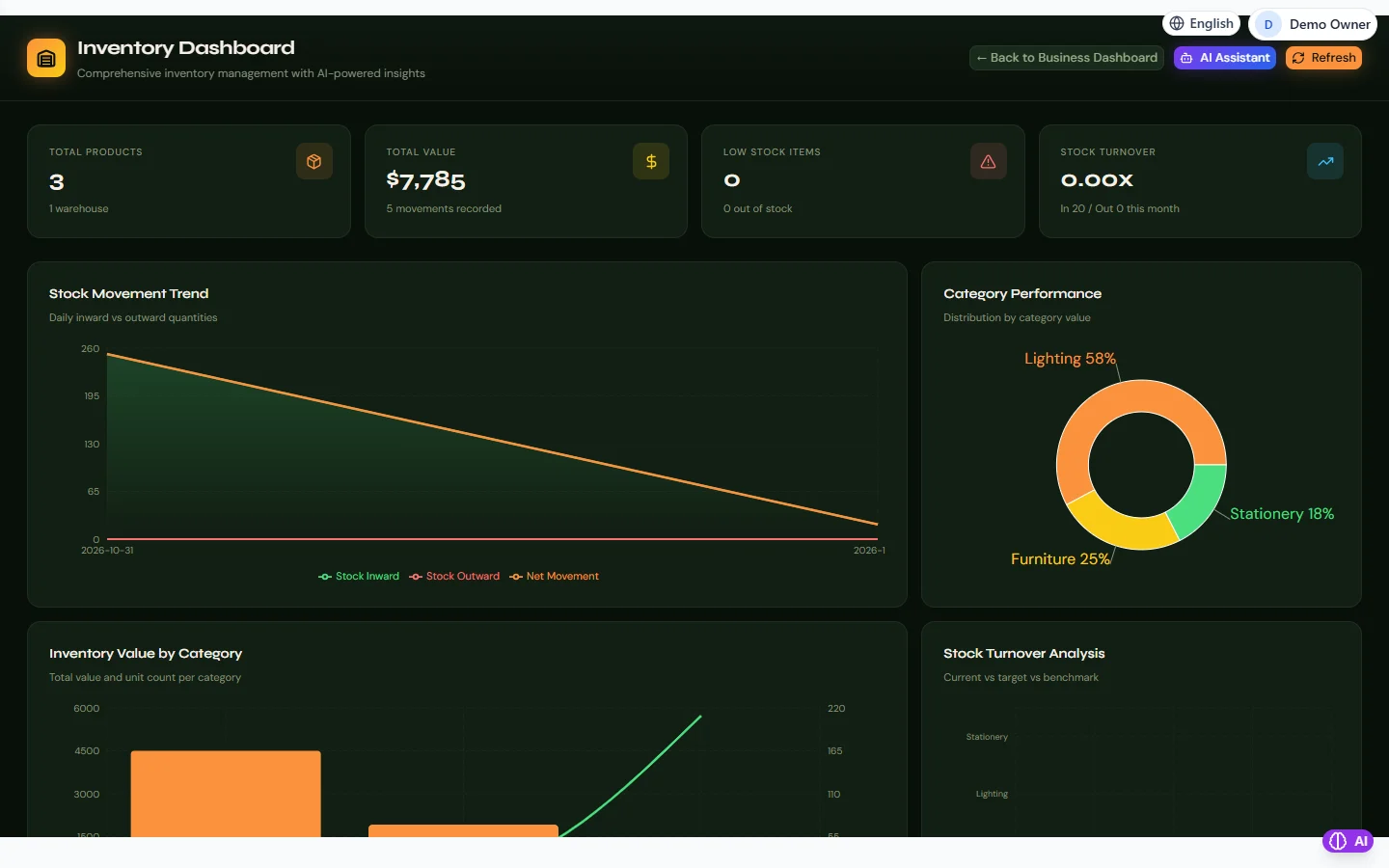
Inventory in RBTERP, with a sample company and fictional data.
Stock is usually a trading business's largest asset after its customers' debts, and the one most likely to be wrong in the books. Good stock control is not complicated. It comes down to recording every movement when it happens, at the right cost, and counting often enough to catch what was missed.
Two questions your stock records must answer
- How many do we have, and where? This is the quantity, per product and per warehouse.
- What is it worth? This is the quantity multiplied by what the goods cost you, not what you sell them for.
Both must be right. A correct quantity at the wrong cost gives a wrong profit figure.
Stock comes in: the supplier's bill
When you buy goods for resale, three things should happen together: stock goes up, at the cost on the bill, and you owe the supplier.
- Enter the supplier's bill with its number, its dates and a line for each product.
- Have it approved by someone other than the person who entered it, if you can. Where the bill follows a purchase order, compare the two before approving.
- Pay it, recording the amount, date, method and bank account.
Lines for goods raise inventory. Lines for anything else, such as transport or a service, are expenses. Keeping these apart is what makes your gross profit meaningful.
Stock goes out
Stock should leave your records only for a reason you can name:
- A sale, through the delivery. See from sales order to cash.
- A transfer to another warehouse or branch. The total does not change, only the location.
- An adjustment for goods damaged, expired, used internally or lost. Record the reason every time.
If stock can leave the shelf without one of these, your records will drift.
Counting
No system knows about a box that fell behind a shelf. Counting is how the records are brought back to the truth.
- Full count: everything, usually once a year, with the warehouse quiet.
- Cycle count: a few products each week, so that everything is counted several times a year without stopping work. Count fast-moving and valuable items more often.
When you count:
- Stop movements for the products being counted, or note the exact time.
- Count without looking at the expected quantity first. People who know the answer tend to find it.
- Compare the count with the records.
- Recount anything that differs before you adjust.
- Post the difference as a count gain or loss, and write down the cause if you find it.
What differences tell you
- Regular small shortages across many items: picking errors or wastage in handling.
- One item short by a full box: a receipt entered that never arrived, or a delivery never recorded.
- More on the shelf than in the books: goods received and not yet entered, or a sale recorded twice.
- Negative stock in the records: you sold something before you recorded receiving it. Fix the order in which documents are entered.
Reordering
Set a minimum quantity for the products you must never run out of, based on how many you sell during the time a supplier takes to deliver. When stock falls to that level, reorder. Review the levels a few times a year, because sales patterns change.
Stock control in RBTERP
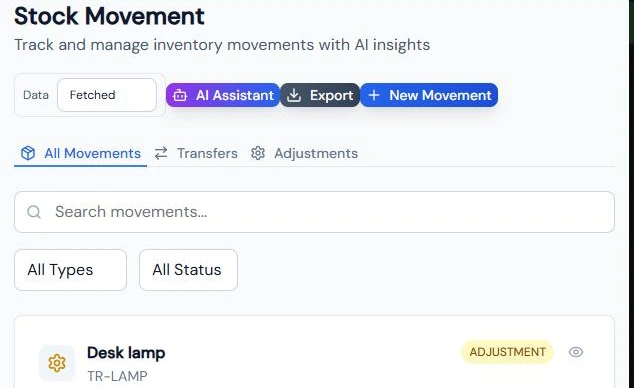
In RBTERP stock movements post to the general ledger as they are entered, so the inventory account and the stock list stay in agreement.
- Buying. In Purchases, under Invoices, enter the supplier's bill with a product line for stock and a description line for anything else. After approval, stock lines raise inventory, other lines are expensed, and the payable shows the bill. A bill linked to an order is matched first, and an unmatched bill is held.
- Movements. In Inventory, under stock movement, record stock in, out, an adjustment or a transfer, with the quantity and, for stock in, the unit cost.
- Counts. Enter the counted quantity. The difference is posted as a count gain or loss to the inventory and adjustment accounts.
- Safeguards. A movement that would take stock below zero is refused. Movements that belong to sales and purchase documents cannot be entered by hand, so the stock list cannot be changed behind the documents' backs.
The Inventory dashboard shows products, warehouses and stock value, low-stock and out-of-stock alerts, and the trend of stock moving in and out.
Check stock value against the ledger as part of your month-end close.
This guide uses the Inventory module of RBTERP: Stock by warehouse with valuation at cost, movements, low-stock alerts and category analysis.