
Guides › Statutory Payroll in Pakistan: EOBI, Social Security and Income Tax
Statutory Payroll in Pakistan: EOBI, Social Security and Income Tax
RBTERP team · · 3 min read
An overview of Pakistan's statutory payroll deductions and contributions, what employers must keep track of, and how RBTERP applies the rules.
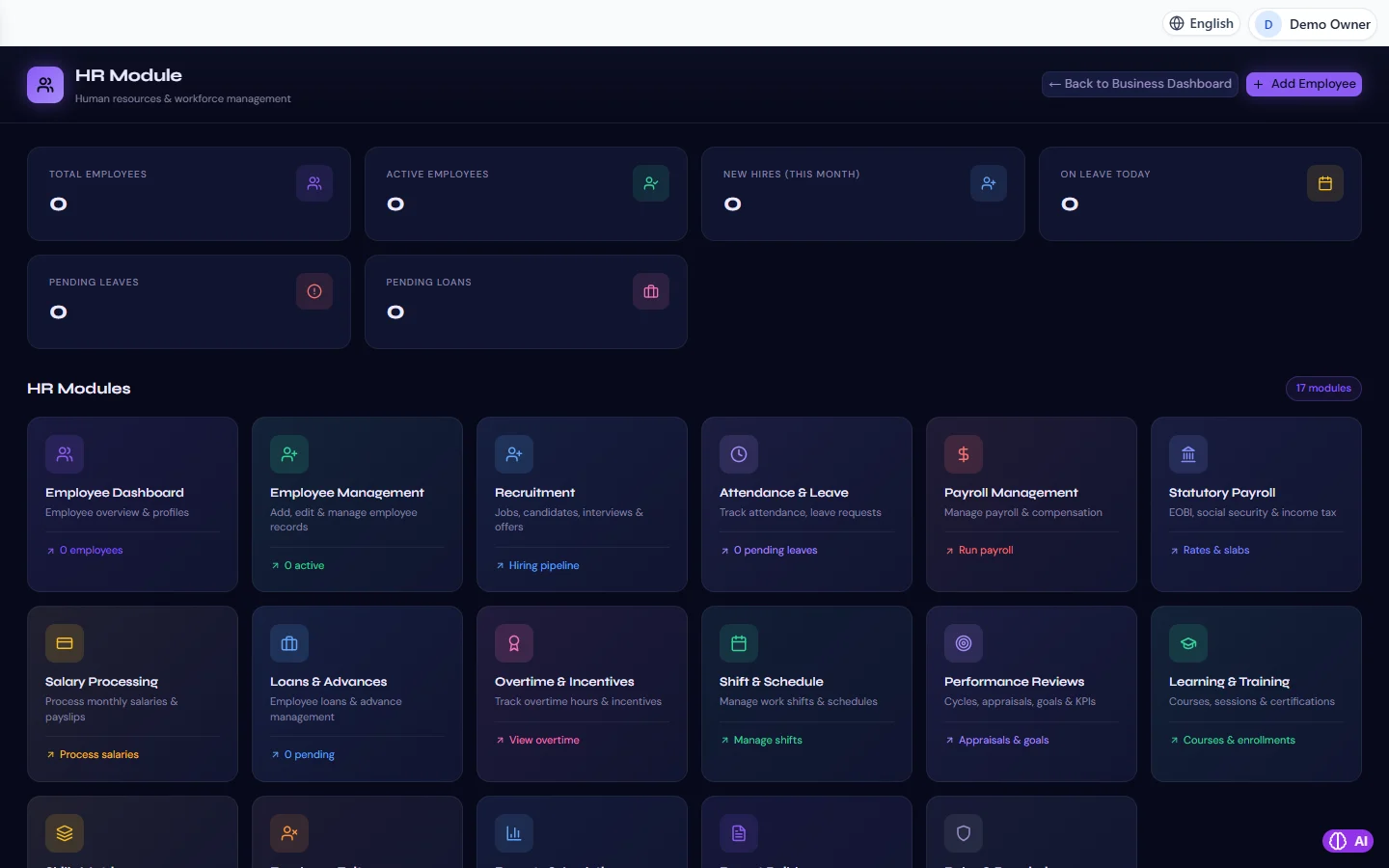
HR & Payroll in RBTERP, with a sample company and fictional data.
Pakistani employers have obligations beyond paying salaries: old-age benefit contributions, provincial social security, and income tax withheld from salaries. Each has its own rules, rates, ceilings and deadlines. This guide explains what each one is and how to keep on top of them. It is an overview, not legal or tax advice; rates and thresholds change, so confirm the current figures with your tax adviser or the relevant institution.
EOBI: old-age benefits
The Employees' Old-Age Benefits Institution runs a pension scheme for private-sector workers. Covered employers register with EOBI and pay contributions for their insured employees each month. Both the employer and the employee contribute, at rates calculated on a wage figure set by the government, which is revised from time to time.
What you need to manage:
- Registration of the business and of each insured employee.
- The current contribution rates and the wage they apply to.
- Monthly contributions, paid by the due date.
- Records of who was covered in each month.
Provincial social security
Social security is run by the provinces, through institutions such as PESSI in Punjab and SESSI in Sindh. It provides medical care and cash benefits to covered workers. Covered employers pay a contribution based on the wages of employees within the scheme's wage limit.
What you need to manage:
- Which province's institution covers each of your locations.
- Which employees fall within the wage limit.
- Monthly contributions and the institution's returns.
Income tax withheld from salaries
Employers must withhold income tax from salaries under the Income Tax Ordinance and pay it to the Federal Board of Revenue. The amount depends on the employee's taxable salary for the year and the tax slabs in force for that tax year, which are announced in the federal budget and can change every July.
What you need to manage:
- Each employee's taxable salary, projected for the full tax year.
- The slabs for the current tax year.
- Monthly withholding and deposit with FBR.
- Statements and certificates the law requires you to file and issue.
Keeping it right
- Update rates at the start of each tax year, and whenever a change is announced.
- Calculate monthly, reconcile annually. Year-end is when under- or over-withholding comes to light; check it during the year instead.
- Keep payables separate. Tax withheld, EOBI and social security are owed to different bodies, on different dates.
- Pay on time. Late payments attract penalties that are easily avoided.
How RBTERP handles statutory payroll
- Statutory payroll is built in: RBTERP's HR module covers EOBI, social security and income-tax slabs as part of the payroll run.
- Rules come from the country pack. For Pakistan, the PK pack provides the statutory rule set for the current tax year and sets Pakistan as the payroll's default jurisdiction. No country logic is hard-coded in payroll itself, so rules can be updated as data.
- One calculation per period. The run applies the jurisdiction's statutory rules with everything else in the employee's pay, on the server.
- Each deduction to its own payable, so tax withheld and contributions are kept apart in the accounts until paid.
- Remittances through the Bank module. A statutory remittance moves the bank account and appears in its register, and the bank, its register and its ledger account agree after the payment. A remittance dated in a closed month is refused.
See running monthly payroll for the full run, and sales tax and withholding setup for withholding on supplier payments, which is a separate regime.
This guide uses the HR & Payroll module of RBTERP: Seventeen HR areas from recruitment to payroll, including statutory payroll with EOBI, social security and income tax.