
Guides › Financial Statements Explained for Business Owners
Financial Statements Explained for Business Owners
RBTERP team · · 3 min read
How to read a balance sheet, a profit and loss account and the key ratios, and which questions each one answers about your business.
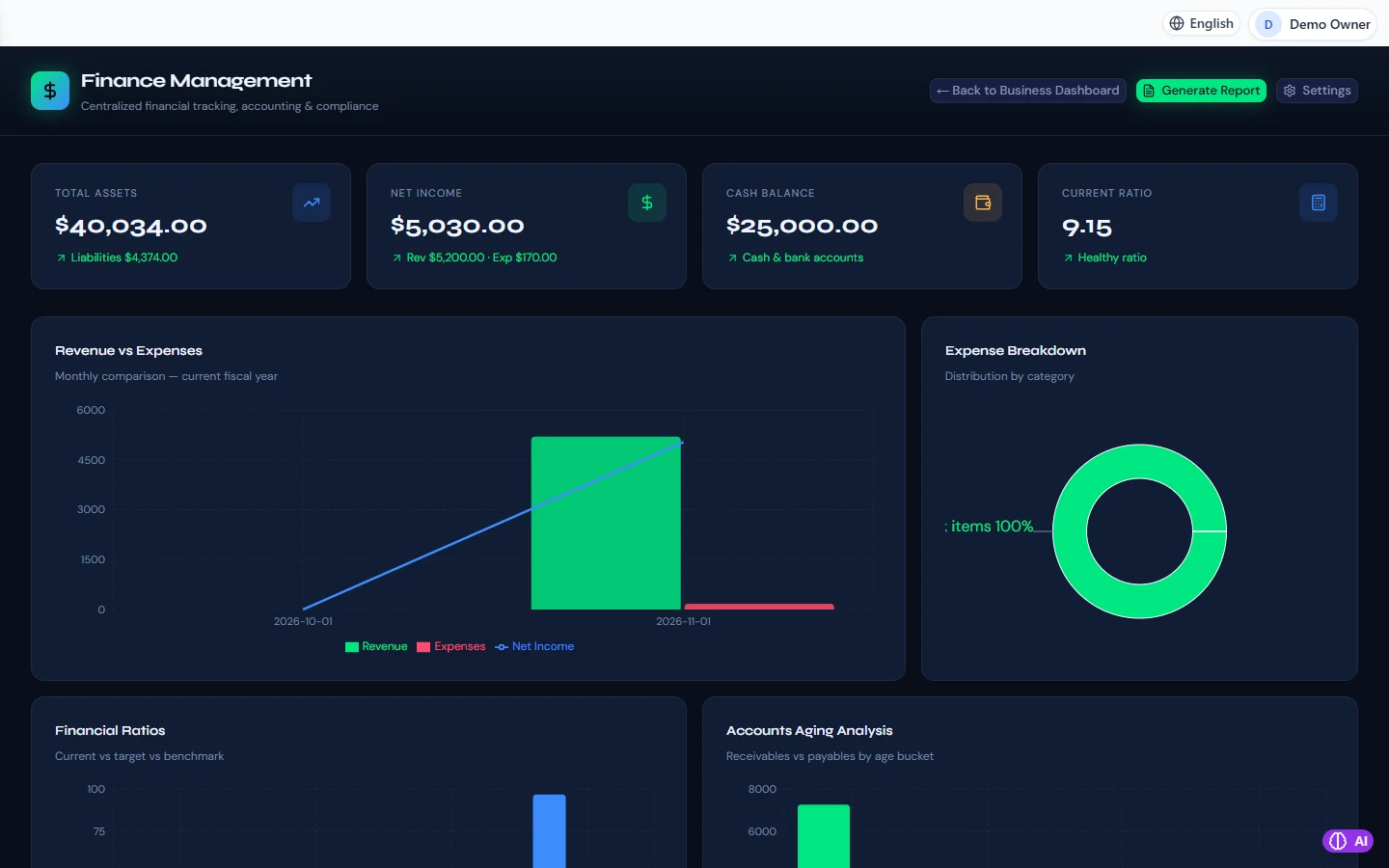
Finance & Accounting in RBTERP, with a sample company and fictional data.
Financial statements answer three questions every owner asks: did we make money, what do we own and owe, and where did the cash go? You do not need to be an accountant to read them. You need to know what each one shows, and what it does not.
The profit and loss account
Also called the income statement. It covers a period, such as a month or a year, and shows:
- Revenue: what you earned from sales, after returns and discounts.
- Cost of goods sold: what the goods you sold cost you.
- Gross profit: revenue minus cost of goods sold. For a trader, the most important line on the page.
- Operating expenses: salaries, rent, utilities, transport, bank charges and the rest.
- Net profit: what is left.
Questions it answers: are we profitable? Is our margin holding? Which costs are growing?
What it does not show: cash. A profitable month can still leave the bank lower, if customers have not paid or stock has been bought.
The balance sheet
It shows the position on one day:
- Assets: cash, money customers owe, stock, equipment.
- Liabilities: money owed to suppliers, tax payable, loans.
- Equity: what belongs to the owners, including profit kept in the business.
Assets always equal liabilities plus equity. That is not a coincidence; it is double entry at work.
Questions it answers: can we pay what we owe? How much is tied up in stock and unpaid invoices? How much of the business is financed by debt?
Ratios worth knowing
- Gross margin: gross profit divided by revenue. Watch its trend more than its level.
- Current ratio: current assets divided by current liabilities. Below one means short-term debts exceed short-term resources.
- Receivable days: how long customers take to pay on average. Rising receivable days drain cash even when sales grow.
- Payable days: how long you take to pay suppliers.
- Stock days: how long goods sit before they are sold.
Reading them well
- Compare. A figure alone means little. Compare with last month, the same month last year, and your budget.
- Read them together. Profit up, cash down, receivables up: customers are paying more slowly.
- Trust closed periods. Statements for an open month can still change as late documents arrive. Final figures come after the month-end close.
- Ask about big movements. Every large change should have a reason someone can name.
Financial statements in RBTERP
RBTERP produces its statements from the double-entry general ledger every module posts to, so they agree with the detailed records by design.
- The Finance dashboard shows total assets, net income, cash balance and the current ratio, revenue against expenses by month, and an expense breakdown.
- Receivables and payables ageing show who owes what and for how long.
- Financial statements and the trial balance are under Finance, then Reports, for any period.
- Any report can be delivered automatically by e-mail on your schedule, daily, monthly or on your fiscal calendar, marked final when every month in it is closed and preliminary otherwise. See automated report subscriptions.
A monthly habit
After each close, spend twenty minutes with three documents: the profit and loss for the month against last month, the balance sheet, and the receivables ageing. Write down the three things that changed most and why. Over a year, that habit tells you more about your business than any annual meeting with your accountant.
This guide uses the Finance & Accounting module of RBTERP: Every invoice, bill, payment and stock movement posts to a double-entry general ledger, with ratios, ageing and financial statements ready when you need them.